
Software,
cut close.
Independent technology consultancy in Ohio. I build software, connect systems, and develop sensors for small businesses.

A sensor system Fescue built measures pressure across a furnace filter in an Indiana home. The gold line marks a clean filter; changes help the customer track buildup.
A furnace filter that phones home.
K&H Sensor Solutions, a family HVAC company, wanted ground truth before a platform: can a filter announce its own condition? Fescue built the whole path. The sensor node, the firmware, the cloud backend, and the dashboard their customers read. The first units are in real homes now, and the feed in the hero is one of them.
Watch the live feed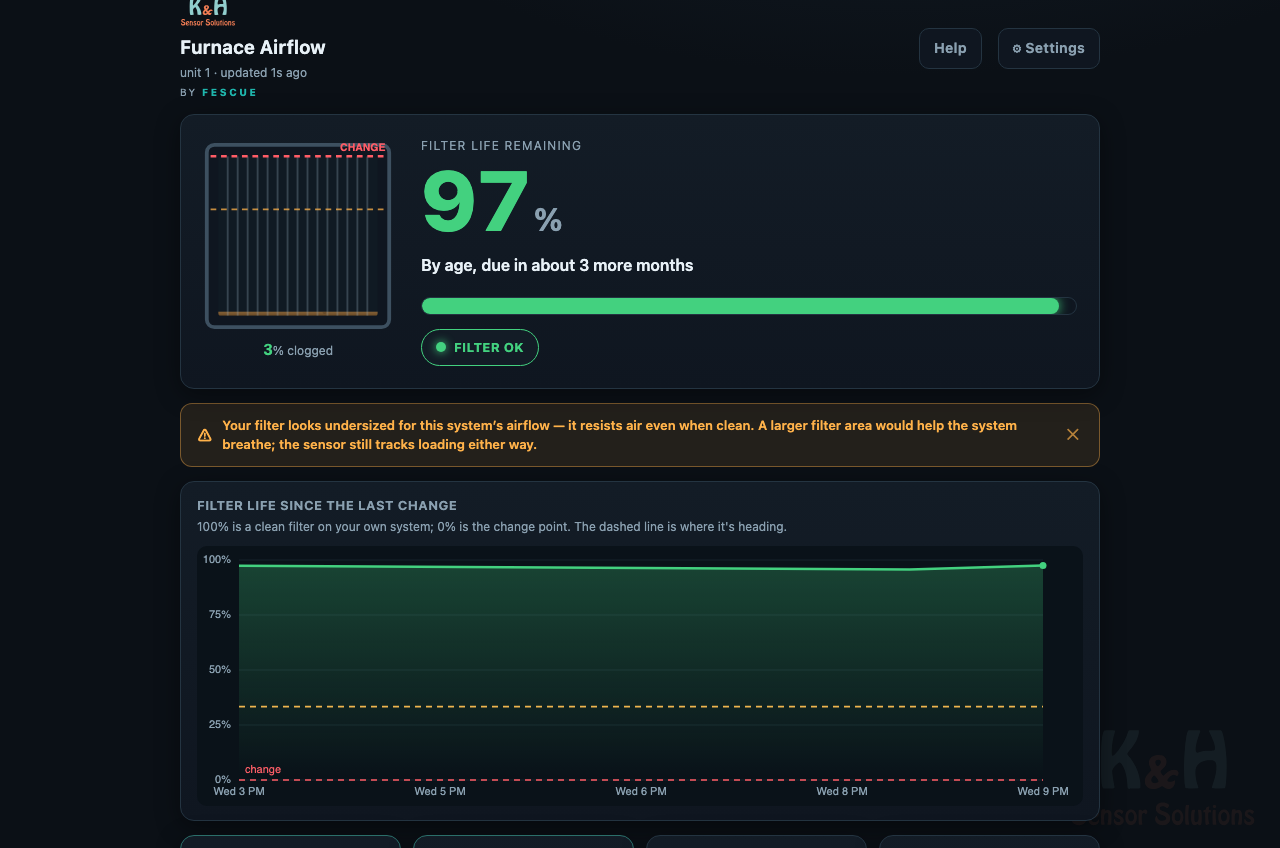
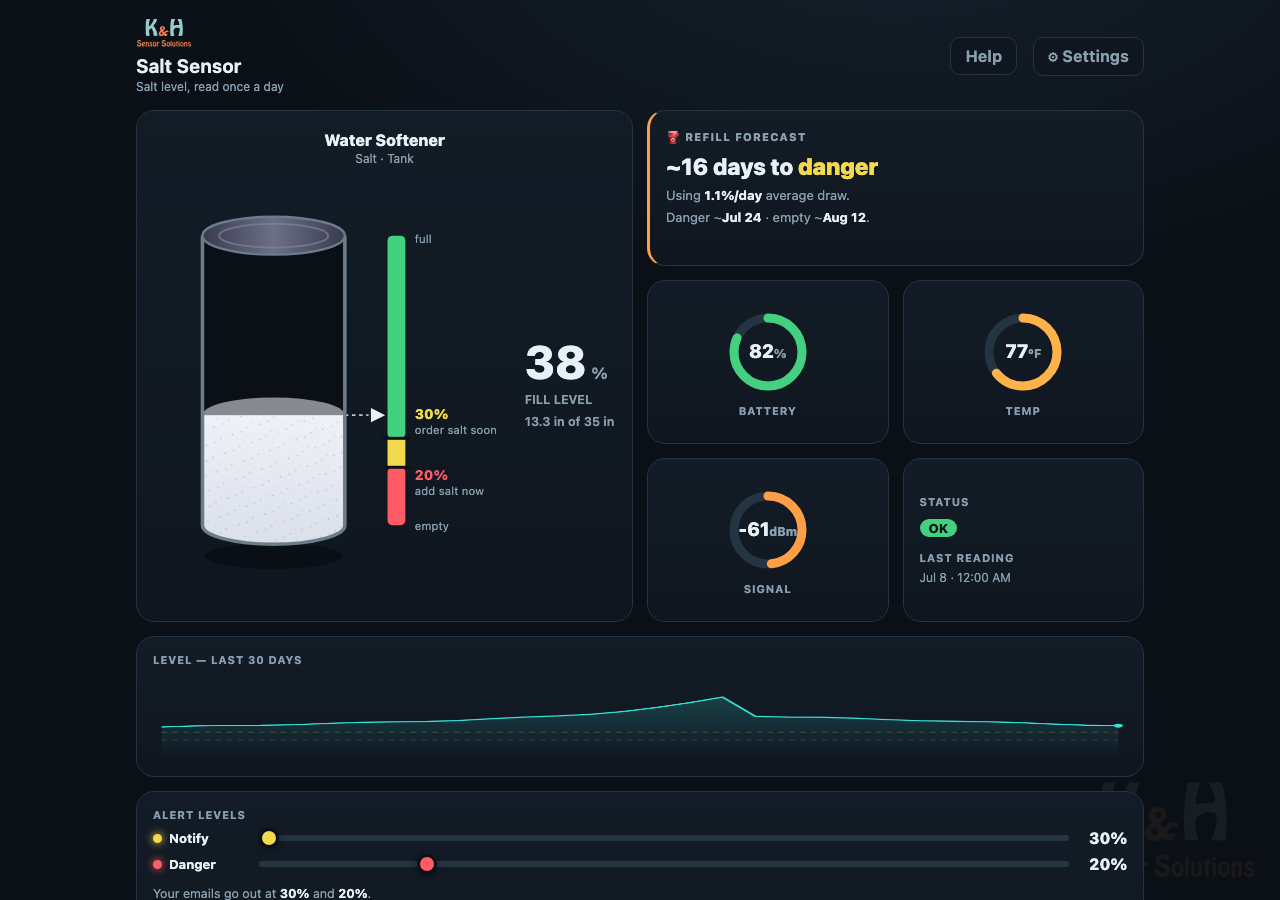
The tank that texts first.
The same company's water-softener customers were on a portal with no source code and no server access. Fescue rebuilt the product from the live site down: the tank-level dashboard, the refill forecast, and three alerts that reach the customer's inbox. It runs on the same backend as the filter sensor, so a customer signs in once and sees the furnace and the tank.
Built where the day breaks.
See what is happening in your business early enough to act. Example: the K&H HQ monitor.
Desktop and web apps that replace brittle spreadsheets, repeated copying and memory-based follow-up. Example: a dealership finance desk's deal calculator.
Handle repeated tasks automatically, with people in control of the decisions. Example: per-VIN walkaround links sent from the lead system.
Measure what is happening in the physical world and bring the readings into useful software. Example: the furnace node.
Good work deserves better tools.
The best operational software feels obvious after it exists. It sharpens the day, protects the judgment that matters, and removes the drag people stopped noticing.
Fescue is built for businesses where work still moves through clipboards, spreadsheets, texts, memory, and one person who knows too much.
Pick the constraint.
When follow-up breaks
Memory becomes the operating system.
The opportunity is real, but the next action lives in texts, inboxes, notes, and whoever remembers first.
The move: from chasing to control.
Talk about thisFind the bottleneck.
Build past it. Decisiveness is not speed without thought. It is the discipline to define the right problem, own the decision, and finish the work.
- Map the work as it is.
Start with the real operating day, not a preferred theory of how the business should run.
- Reduce it to one constraint.
Pick the point where better information, automation, or software will change the outcome.
- Ship the smallest useful system.
Build the first tool that proves the move and earns the right to grow.
- Leave control visible.
The system should be understandable, adjustable, and owned by the people who depend on it.
Fescue is Justin Huth.
Fescue is an independent technology consultancy based in Ohio. I build software, connect systems, and develop hardware for businesses with practical problems to solve.
I spent years in car sales, then the finance office, then running it. That work taught me to listen carefully, make decisions under pressure, and explain complicated things clearly. It also showed me how much a business can depend on spreadsheets, workarounds, and one person who knows how everything fits together.
Fescue began with a pressure sensor. A company I work with needed one, but the quote and timeline didn’t make sense for the problem. I took on the build, working through the hardware, software, and interface. That first project became the foundation for Fescue.
Today, I bring that same approach to software, integrations, connected hardware, and websites: understand the work first, then build something that makes it easier. Technical decisions should serve the people using the result.
When you work with Fescue, you work directly with me. I’ll explain the options, be clear about scope and tradeoffs, and take responsibility for the work from the first conversation through delivery and ongoing support.
Start a project.
Tell me what is getting in the way.
I’ll reply within one working day, and we’ll start with a conversation about the problem and whether I can help.